

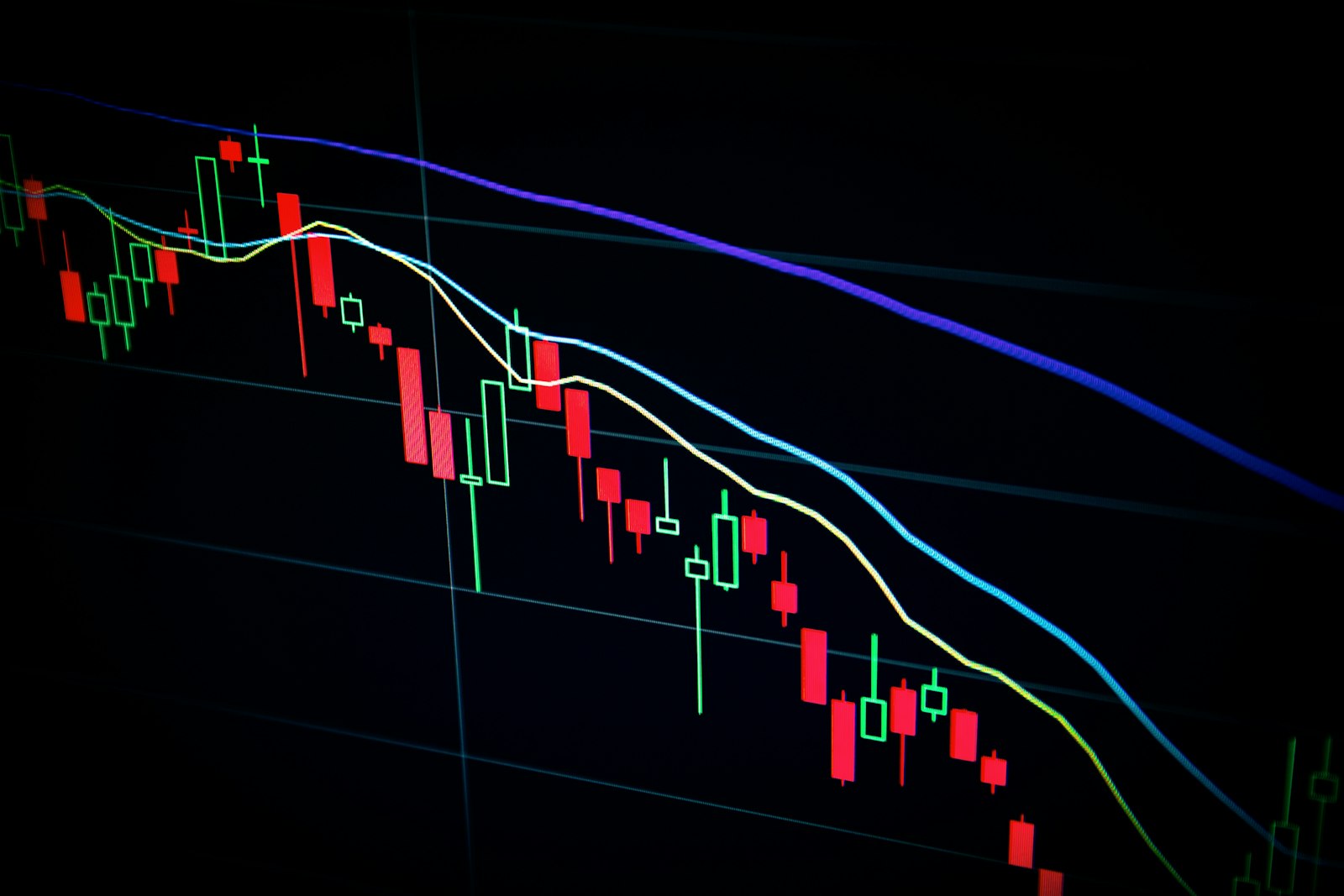
ECB vs. the Ormuz Shock: A Rate Hike at the Worst Possible Time
When oil at $95 forces the central bank to tighten into a slowing economy
- The partial blockage of the Strait of Ormuz has pushed Brent crude to $95/barrel (+22% in May), reigniting eurozone inflation to 3.0% in April 2026.
- The ECB is expected to raise rates by 25bp on June 11 — its first tightening move in 18 months — despite a clear slowdown in European growth.
- This stagflationary dilemma — imported inflation combined with fading domestic demand — places policymakers in an impasse that standard monetary models cannot cleanly resolve.
- Short-duration European government bonds (2–5Y) and physical gold offer the best portfolio protection in this environment.
- Three key milestones ahead: ECB meeting (June 11), eurozone inflation data (June 13), and ongoing Ormuz negotiations.
The Ormuz Shock — Anatomy of a Systemic Crisis
The Strait of Ormuz — the narrow waterway through which roughly 20% of global crude oil exports flow — emerged in May 2026 as the epicentre of a geopolitical crisis with far-reaching economic consequences. US-Iran tensions culminated in a partial blockade of this strategic corridor, propelling Brent crude from $78/barrel in early May to $95/barrel by June 1 — a 22% surge in four weeks and a level of daily volatility not seen since the 2022 energy crisis.
This price spike is not purely speculative. It reflects a structural vulnerability long underestimated: the global economy remains deeply dependent on Gulf hydrocarbons. The International Energy Agency, World Bank, and IMF issued a rare joint communiqué, warning of « an oil shortage that could threaten the global economy this summer. » The United States simultaneously tapped its Strategic Petroleum Reserve (SPR) — a clear signal that Washington itself acknowledges the severity of the shock.
For the eurozone, the impact operates on two fronts simultaneously. Energy bills are rising, compressing industrial margins and household purchasing power. But the resulting economic slowdown — tighter consumer budgets, deferred investments, heightened uncertainty — is simultaneously undermining domestic demand. This precise combination defines stagflation: prices rising while growth decelerates.
« The ECB is being forced to use a surgeon’s scalpel against a shock that requires geopolitical solutions, not monetary ones. »
BNP Paribas Markets 360, Macro Note, May 2026
The ECB in a Bind — Raising Rates Into a Slowing Economy
Eurozone inflation climbed to 3.0% in April 2026, up from 2.6% in March, driven almost entirely by energy prices. This reading places the European Central Bank in a position that its standard economic models cannot cleanly resolve. The deposit rate currently stands at 2.00%, held steady across seven consecutive meetings. Money markets now price a 25bp hike at the June 11 meeting with 80% probability.
ECB Executive Board member Isabel Schnabel dispelled any doubt in a May 28 speech in Helsinki: « The June decision will not be conditional on a diplomatic agreement over the Strait of Ormuz. The energy shock is already structurally embedded in our inflation projections. » This statement crystallises the fundamental dilemma: the ECB must respond to a supply shock — imported inflation not driven by excess demand — with a tool designed to cool demand.
The parallel with 1973–1974 is hard to avoid. During the first oil shock, Western central banks delayed tightening, feeding wage-price spirals that entrenched inflation for years. Today, the ECB is choosing pre-emptive discipline — even at the cost of slowing an economy already growing at just 0.3% in Q1 2026. It is a painful trade-off, but one the ECB, jealously guarding its hard-won anti-inflation credibility from the post-2022 cycle, feels it cannot avoid.
Anatomy of the Stagflationary Risk in the Eurozone
The June 2026 context carries troubling echoes of two historical episodes. In 1973–1974, the first oil shock combined double-digit inflation with recession across most industrialised nations — the canonical definition of stagflation. In 2022, the Ukrainian energy crisis forced the ECB to execute its most aggressive rate hike cycle since its founding, with direct consequences for European property and bond markets.
The key difference from 2022 is that the ECB is starting from a much lower base rate (2.00% vs. 0.00% in January 2022). The tightening headroom is therefore limited, but the impact on variable-rate borrowers will be tangible by Q3. J.P. Morgan Asset Management estimates that each 25bp hike reduces eurozone growth by 0.10–0.15 percentage points with a six-to-nine-month lag — implying a visible GDP drag by late 2026.
The critical unknown remains the wage-price spiral. Wage negotiations in Germany (IG Metall, automotive sector) and France (civil servants, minimum wage) are taking place against a backdrop of elevated inflation. If nominal wages accelerate in response to cost-of-living pressures, the supply shock transforms into durable core inflation — and the ECB will be forced to tighten further. Markets currently assign a 30% probability to this scenario — non-negligible, and reason enough for portfolio caution.
Portfolio Strategy — Repositioning for Stagflation
In a stagflationary regime, portfolio construction must simultaneously satisfy three imperatives: preserve purchasing power against inflationary erosion, limit sensitivity to long-duration rates, and maintain sufficient carry to avoid silent capital degradation. The allocation suited to the disinflation regime of recent months merits selective adjustment.
| Asset Class | Signal | Suggested Vehicle | Rationale |
|---|---|---|---|
| EUR Govts 2–5Y | Overweight | iShares EUR Govt Bond 1-3Y (IBGS) | 2.8–3.2% carry, controlled duration risk |
| Physical Gold / ETF | Overweight | iShares Physical Gold (IGLN) | Hedge vs. inflation & geopolitical stress |
| EUR Energy Equities | Neutral + | TotalEnergies, ENI direct | Mechanical Brent beneficiaries |
| EUR Defensive Equities | Neutral | iShares MSCI Europe Quality (IEMS) | Resilient margins, stable dividends |
| EUR Money Market | Neutral | Variable NAV money market funds | ~1.9% rate, maximum liquidity |
| EUR High Yield | Reduce | — | 380bp spreads insufficient; refinancing wall ahead |
| REITs / Listed Property | Reduce | — | Discount rate sensitivity, valuations under pressure |
| Long Duration Bonds (10Y+) | Reduce | — | Vulnerable if ECB signals a more aggressive cycle |
Several categories warrant particular vigilance. European High Yield credit, with spreads at 380bp that appear insufficient to compensate for default risk in a deteriorating growth environment, calls for underweighting. BBB–/BB issuers face a 2026–2027 refinancing wall at rising borrowing costs. Listed real estate (REITs), fundamentally sensitive to discount rate assumptions, remains under pressure. Long-duration bonds (10Y+) are especially vulnerable if the ECB signals a more aggressive path than the currently priced 25bp.
June Agenda — Three Milestones to Watch
June 11 — ECB Meeting and Christine Lagarde press conference. The 25bp hike is priced in; it is the accompanying guidance that will determine the magnitude of bond market moves. If Lagarde signals further hikes possible in July and September, European long rates could jump an additional 20–30bp. If she emphasises the exogenous nature of the energy shock, markets may interpret the move as a one-off — a supportive reading for bonds and equities.
June 13 — Supplementary inflation data. French (INSEE) and Spanish inflation readings will serve as leading indicators for the ECB’s July projections. Accelerating core inflation (ex-energy and food) would confirm wage-price spiral fears; stabilisation would support the transient shock narrative.
Ongoing — Ormuz diplomatic developments. This remains the dominant exogenous variable. A de-escalation agreement would quickly pull Brent back toward $78–82 and relieve inflationary pressure on the ECB — the favourable scenario that markets currently price at 25% probability. Conversely, military escalation pushing Brent above $110 would compel a more aggressive ECB tightening path — a scenario prudence demands be factored into portfolio construction.
- The Ormuz shock creates an unprecedented stagflationary environment, forcing the ECB to raise rates despite slowing eurozone growth.
- The June 11 hike reflects a difficult trade-off: fighting imported inflation with demand-cooling tools that cannot address supply disruptions.
- Short-duration EUR government bonds (2–5Y) and physical gold represent the strongest portfolio hedges in this environment.
- Long-duration assets — REITs, High Yield, 10Y+ bonds — remain vulnerable and warrant reduction in balanced portfolios.
- The key variable remains geopolitical: an Ormuz de-escalation would rapidly change the outlook for the ECB, Brent, and European markets.
This document is provided for informational purposes only and does not constitute investment advice, a personalised recommendation, or an offer to buy or sell any financial products. Past performance is not indicative of future results. All investments involve risk, including the risk of capital loss. The information contained in this article reflects Riviera Wealth Management’s analysis as of the publication date and is subject to change. Riviera Wealth Management is a registered independent financial advisor (CIF), registered with ORIAS and a member of the CNCGP.


Une réponse à “ECB vs. the Ormuz Shock: A Rate Hike at the Worst Possible Time”
[…] Client Devenir client ? FR / EN […]